Recycling and Sustainability for Gardening Services Wimbledon
 Gardening Services Wimbledon is committed to creating an eco-friendly waste disposal area and developing a practical, long-term approach to a sustainable rubbish gardening area across local green spaces. We combine careful on-site separation with off-site processing to reduce landfill, lower carbon emissions and return valuable organic matter back to the soil. Our recycling and sustainability policy is designed to align with borough best practice while going further with circular-economy thinking.
Our Targets and Commitments
We have set a clear recycling percentage target: an ambitious 85% recycling rate for garden and green waste within two years of implementation, and a stretch goal of a 70% overall recycling rate for all job-related waste streams (including timber, plastics and mixed recyclables) within five years. These figures are not arbitrary — they reflect realistic, measurable objectives that influence daily decisions on site, in transit and at partner facilities. Targets are reviewed quarterly and feed into staff training, vehicle routing and client advice on waste separation. Our approach complements the boroughs' approach to waste separation: we mirror the separation of food, green and dry recyclables used locally, making it simple for residents and community projects to integrate with our operations. This alignment helps increase capture rates and reduces contamination, so more material can be composted or reprocessed.
Local Transfer Stations and Processing
We work closely with several local transfer stations and recycling centres in South West London and neighbouring boroughs to make sure garden waste is handled responsibly. By routing material through authorised transfer stations, we ensure that:- green waste is sent to commercial composting or anaerobic digestion facilities,
- timber and bulky vegetation are screened and separated for chipping or reuse,
- mixed recyclables are baled and transferred to licensed MRFs for further sorting.
Low-Carbon Fleet and Sustainable Transport
To cut transport emissions we operate a fleet of low-carbon vans — a mix of battery-electric and plug-in hybrid vehicles — used for local collections and site visits. Vehicles are charged at depots powered increasingly by renewable electricity, and route-planning software keeps mileage low, reducing fuel use and the carbon footprint of our sustainable gardening waste disposal services. Low-emission transport is a key part of our plan to offer a truly sustainable rubbish gardening area service across Wimbledon.Vehicle choice is only part of the story: we schedule collections to match transfer station opening times and composting windows, reducing waiting time and the need for interim storage. This operational discipline contributes directly to our recycling percentage target and helps maintain high-quality feedstock for compost systems.
We also prioritise material reuse before recycling. Whenever possible, timber and large branches are reclaimed for garden projects, and wood chippings are retained for on-site mulching. For items that cannot be repaired or repurposed locally, we work with downstream partners to find the best secondary use. This reduces the pressure on transfer stations and supports a circular local economy focused on sustainable garden waste management.
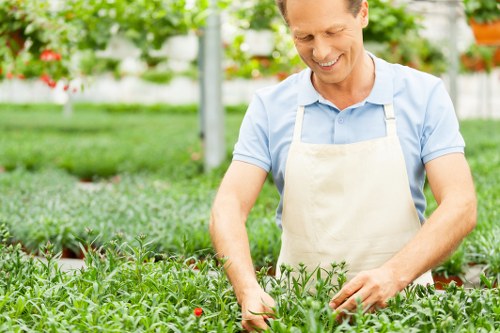 Partnerships with charities and community groups are central to our sustainability model. We donate surplus compost, topsoil, and usable plants to local community gardens, allotment societies and environmental charities. Through these collaborations, materials that would otherwise be discarded contribute to neighbourhood greening projects, biodiversity initiatives and community food-growing schemes. Working with charities amplifies the social as well as ecological benefits of responsible garden waste disposal.
 To ensure transparency and continuous improvement we publish annual summaries of our waste flows and measure performance against our recycling percentage target. Staff training includes correct on-site segregation, identification of recyclable materials and secure transport protocols. We also encourage clients to adopt simple practices — for example, keeping soil and stones separate from green waste and storing garden plastics together — so that each collection supports a high-quality, sustainable rubbish gardening area outcome.
Summary of key actions:
- Ambitious recycling targets: 85% for green waste; 70% overall within five years.
- Local transfer station use: authorised routing for composting, chipping and MRF processing.
- Charity partnerships: donations of compost, plants and tools to community projects.
- Low-carbon vans: electric and hybrid fleet plus optimized routing.
- On-site segregation: aligned with borough food/green/dry separation to reduce contamination.
By integrating these steps, Gardening Services Wimbledon aims to set a high standard for an eco-friendly waste disposal area and a resilient, community-centred sustainable rubbish gardening area. Our plan is practical, measurable and rooted in local partnerships that keep resources cycling within the community while cutting carbon and landfill. We are proud to lead locally with pragmatic, green solutions that protect and enhance Wimbledon’s gardens and public spaces.